Fiery Gochujang Noodles
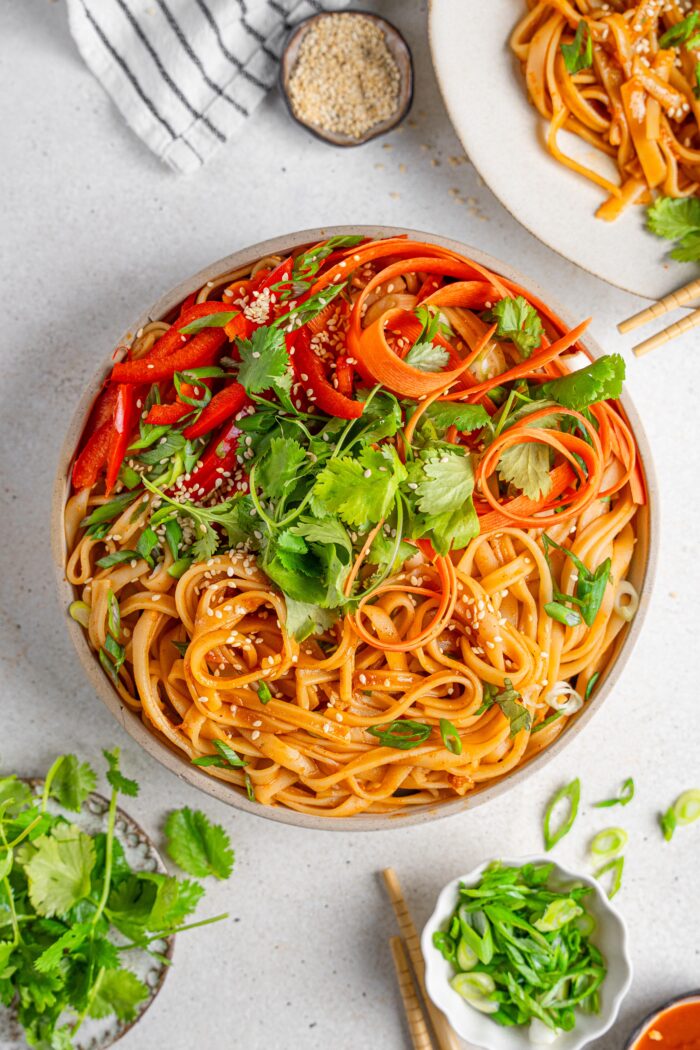
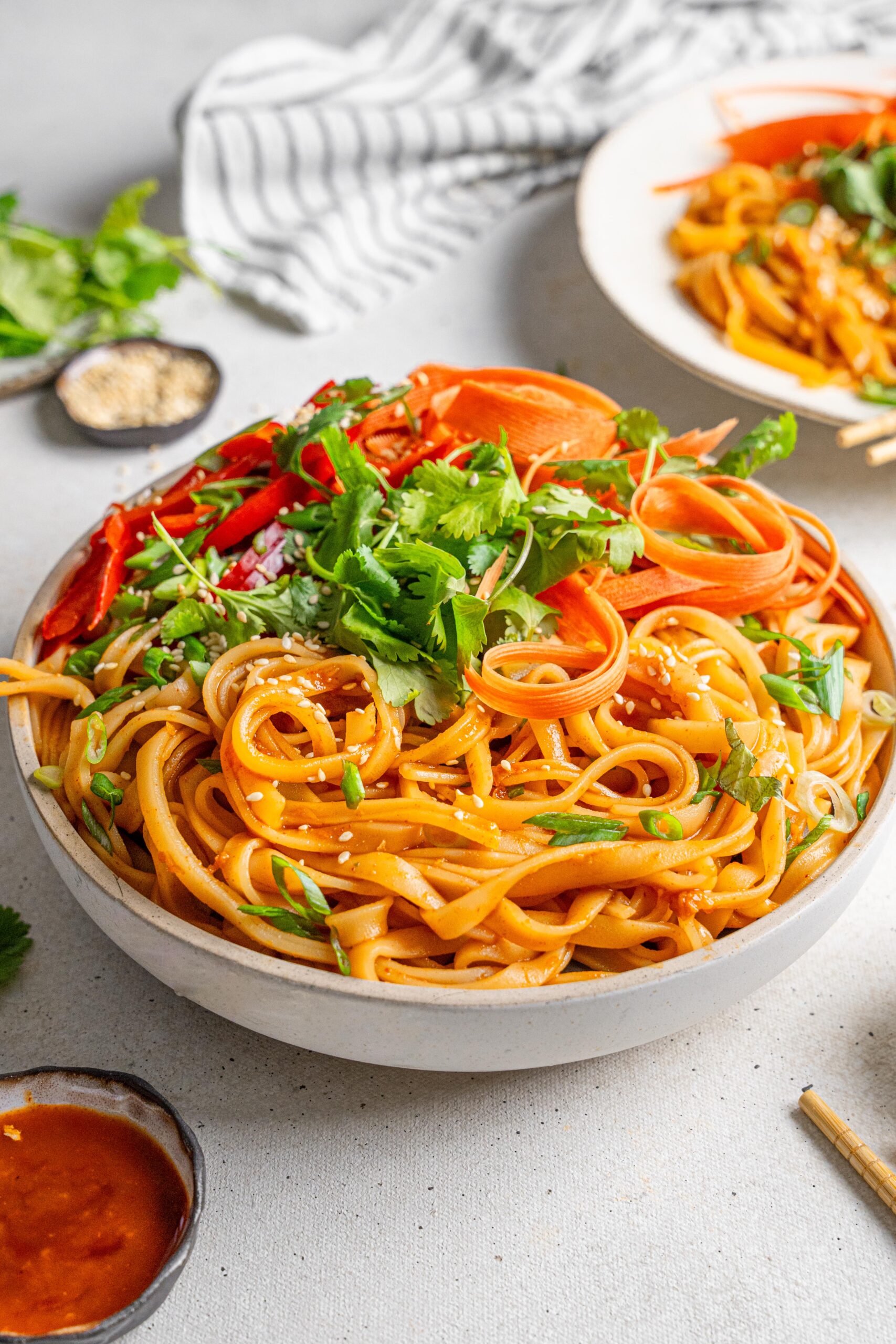
Get ready for the easiest dinner ever! These fiery gochujang noodles are quick, inexpensive, and most importantly, delicious.
In an effort to help people eat more plants, I try to target issues that usually stand in our way. With recession recipes, the goal was to show that vegan cooking does not have to be expensive. With Quickies like these fiery gochujang noodles, it was all about saving time in the kitchen.
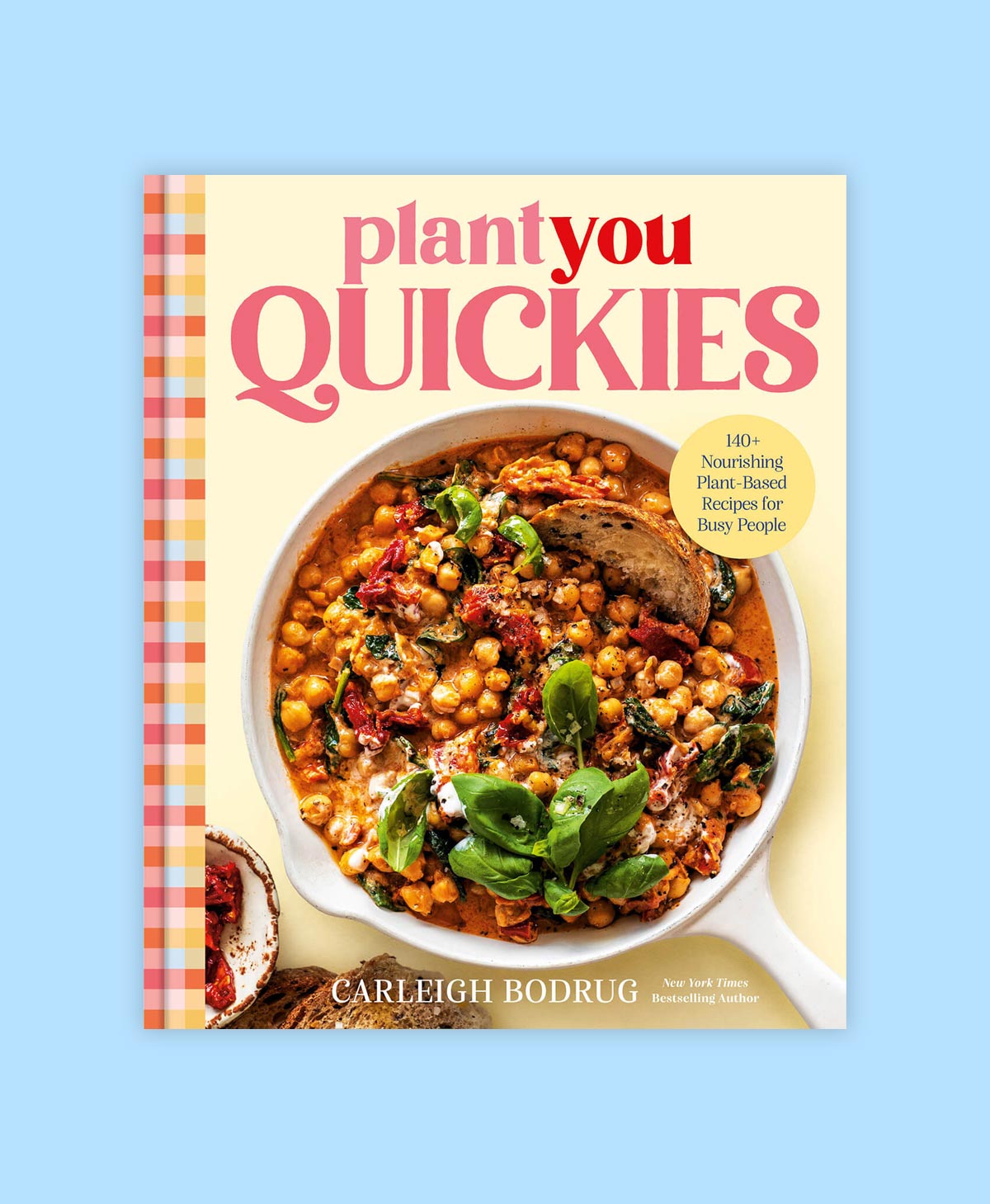
By far, my most popular series is Scrappy Cooking. In fact, there was eventually enough recipes (and demand) for an entire Scrappy Cookbook! Coming in April 2024, this book contains 150+ delicious plant-based meals aimed at helping you make the most of your ingredients.
PREORDER NOW to receive instant access to $120 worth of FREE CONTENT, including meal plans, organization sheets, home hacks, and a LIVE COOKING CLASS. It’s the perfect holiday gift and something to look forward to in the new year.
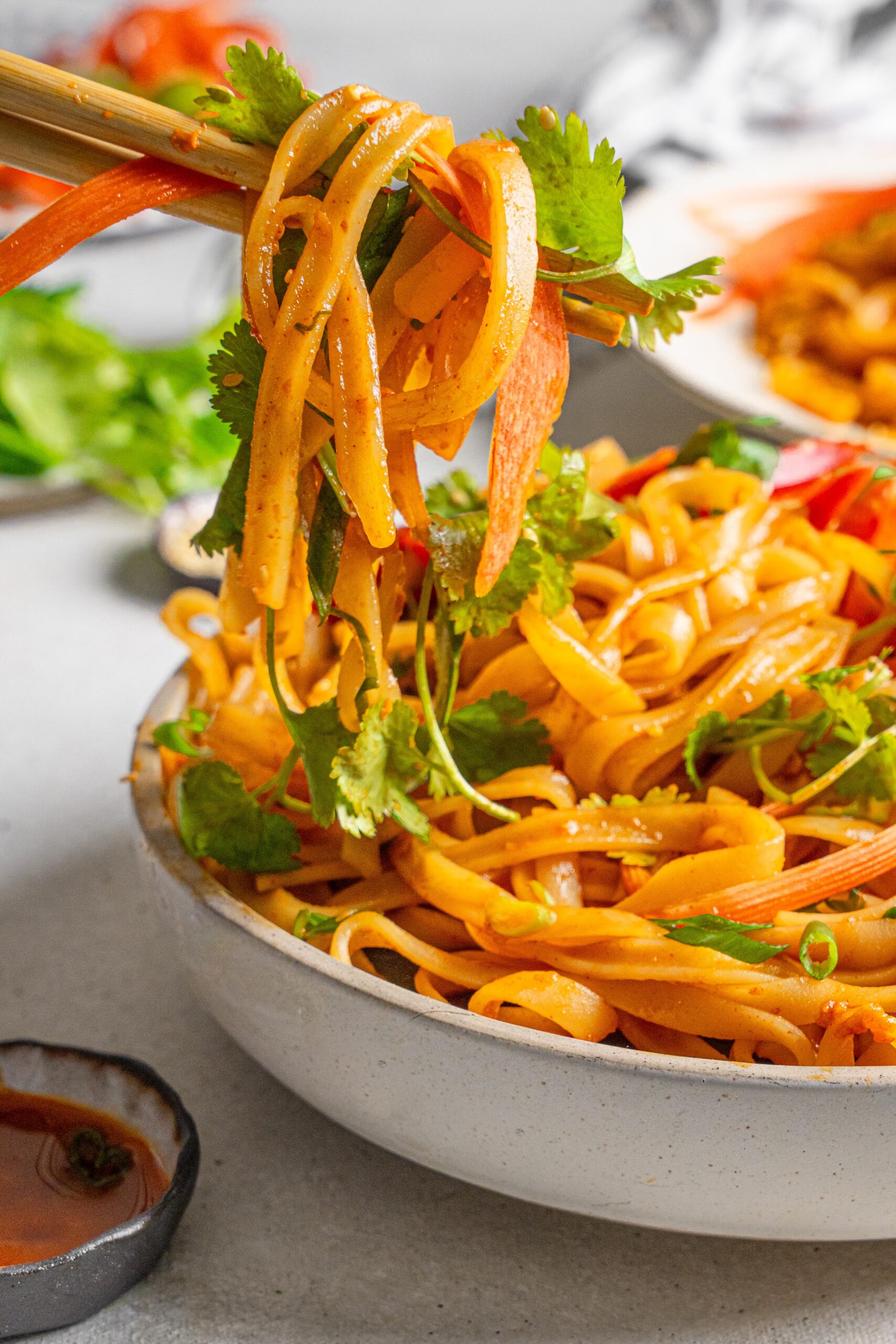
Why You’ll Love This Recipe
- Naturally, the biggest selling point of this recipe is speed. It’s as quick as instant ramen, but much healthier.
- With speed comes simplicity. Pretty much anyone can make these fiery gochujang noodles. It’s perfect for beginner cooks, busy people, and anyone who gets overwhelmed by complex recipes.
- Many recipes in the Quickies series overlap with recession recipes, as they typically require a few key ingredients and some flavor. For the vegetables, you can use whatever you have available and swap as required.
- Gochujang adds a great amount of flavor while not being overwhelmingly hot. It’s a great option for those who prefer a milder chili flavor that complements the rest of the ingredients.
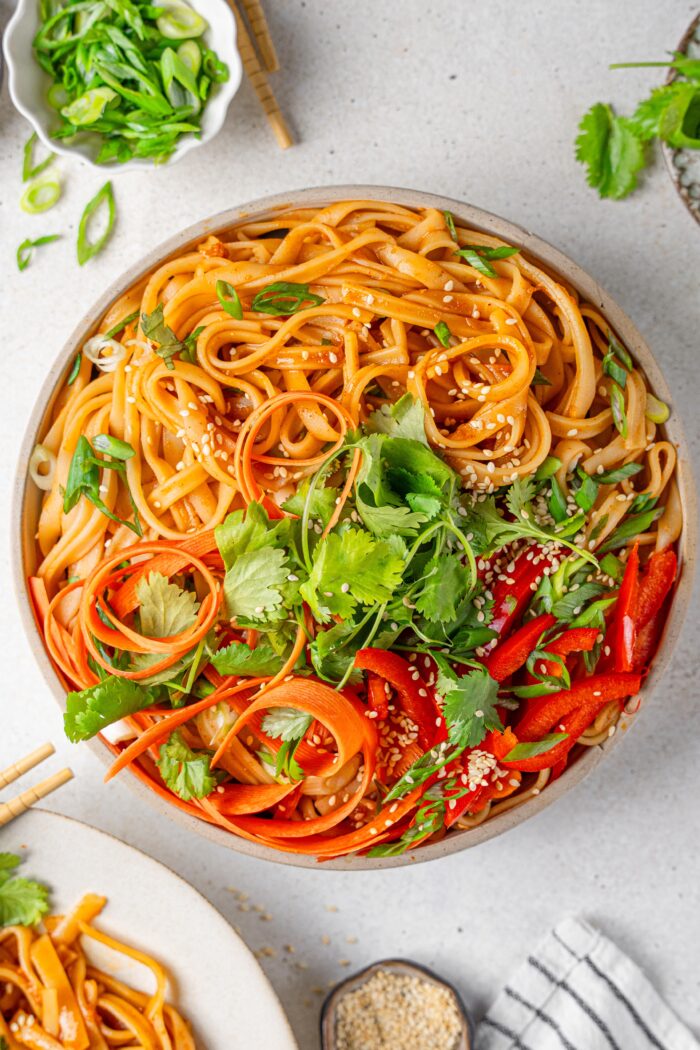
Magic of Gochujang
Gochujang is a Korean fermented red chili paste that is a staple in Korean cuisine. It’s made with chili powder, glutinous rice, fermented soybean powder, barley malt powder, and sometimes sweeteners. The mixture is then allowed to ferment for several months to develop its rich, savory, and spicy flavor profile.
Gochujang is known for its versatility and is often used as a condiment, marinade, or base for sauces in Korean dishes. It adds both heat and depth of flavor to a variety of dishes, such as bibimbap, tteokbokki, and bulgogi. Its popularity has also spread beyond Korea, and it’s now used in various international cuisines.
Gochujang differs from other spicy seasonings like hot sauce or chili flakes in terms of its ingredients, flavor profile, and texture. Here are some key differences:
- Ingredients. Gochujang is made from a unique combination of ingredients that gives gochujang its distinct umami-rich flavor.
- Fermentation. Gochujang undergoes a fermentation process that can last for several months. This fermentation process contributes to the development of complex flavors, a deeper color, and a slightly tangy taste.
- Texture. Gochujang has a thick, paste-like consistency, making it suitable for use as a base in various sauces and marinades.
Key Ingredients
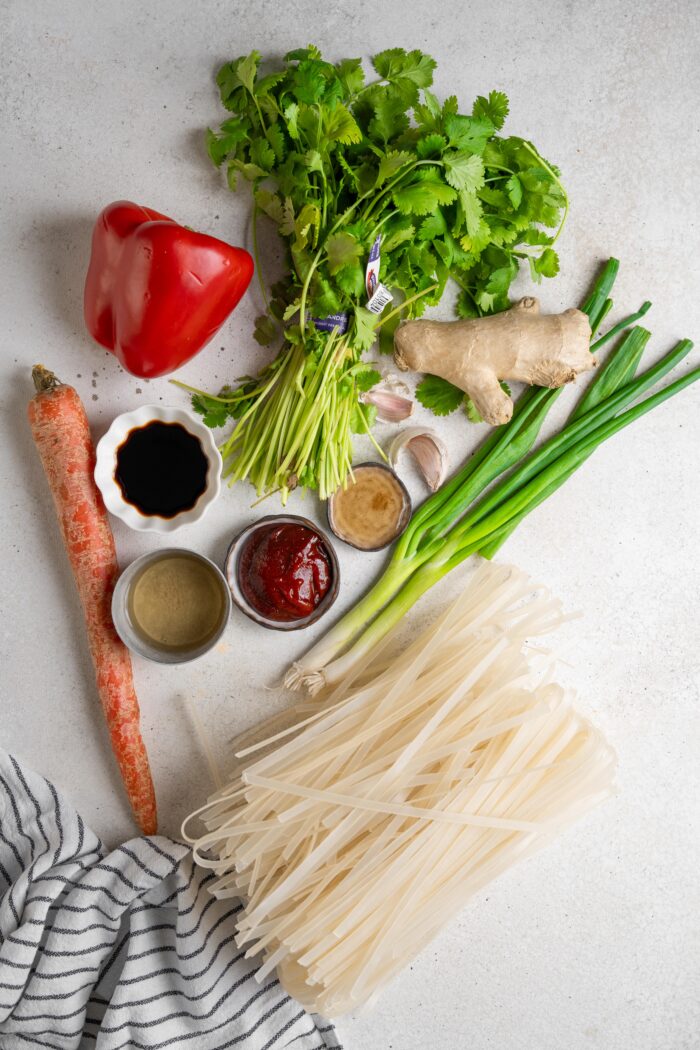
Along with gochujang paste, this recipe requires a few simple ingredients to make a flavorful and nutritious meal.
- Rice noodles (or a different type of noodle) are a source of carb and a convenient “vessel” for the delicious sauce.
- Soy sauce is a savory component that also helps to thin out the sauce.
- Maple syrup adds sweetness and helps to balance the flavors.
- Peanut butter has a wonderful earthy flavor, creamy consistency, and fat content.
- Garlic and ginger are both aromatic, potent, great for digestion and the immune system.
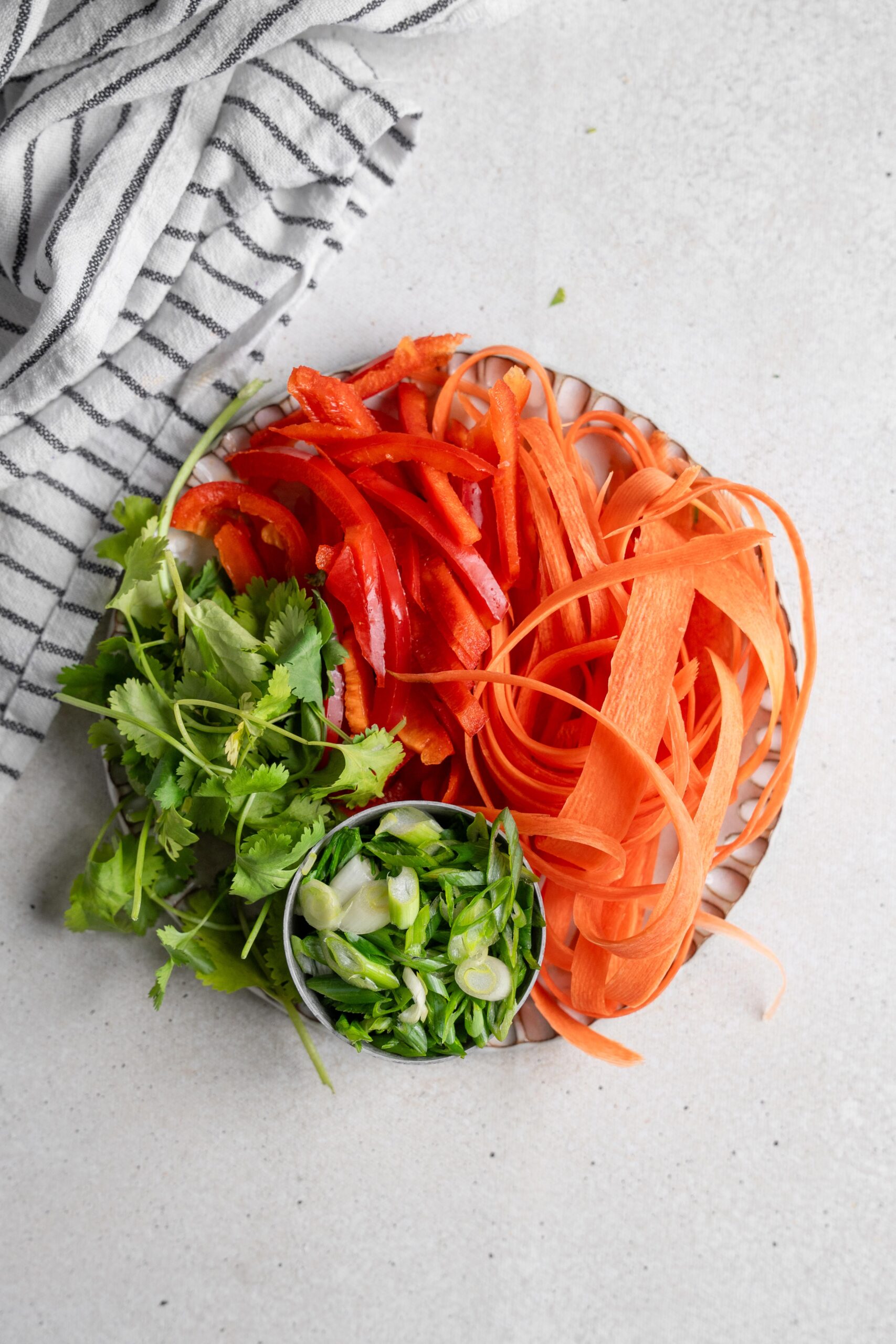
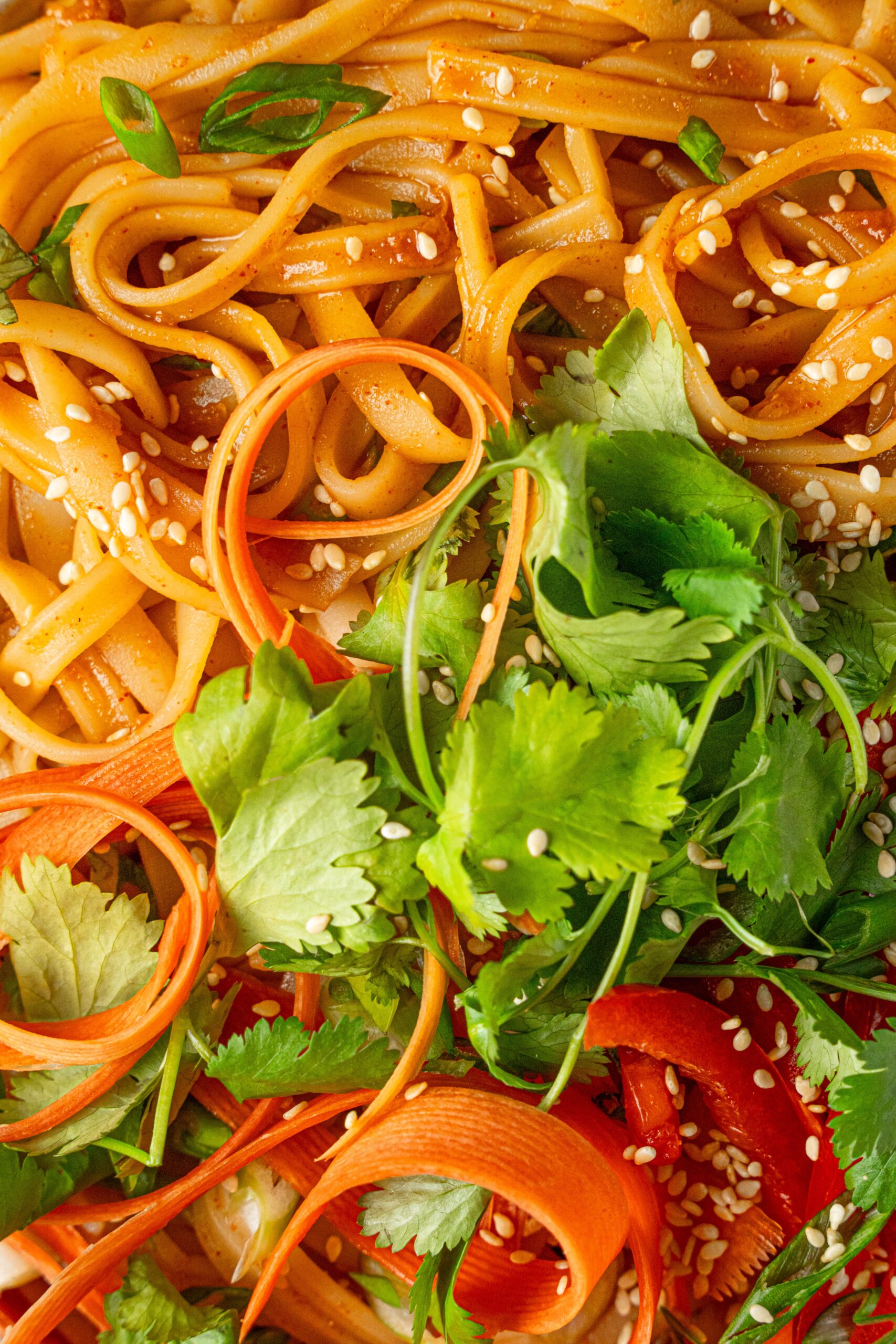
- Fresh vegetables like green onions, cilantro, bell pepper, and carrots make a lovely topping to the dish, as well as adding nutrients and a crunch to every bite.
Kitchenware and Equipment
In addition to being super quick, these fiery gochujang noodles require very little kitchen equipment. You’ll need something to cook the noodles in, obviously, like a good non-stick pan.
If using fresh veggies as listed, you will also need a sharp knife and a vegetable peeler to make carrot ribbons. Finally, for the sauce, you just need a jar and a whisk, or even a fork.
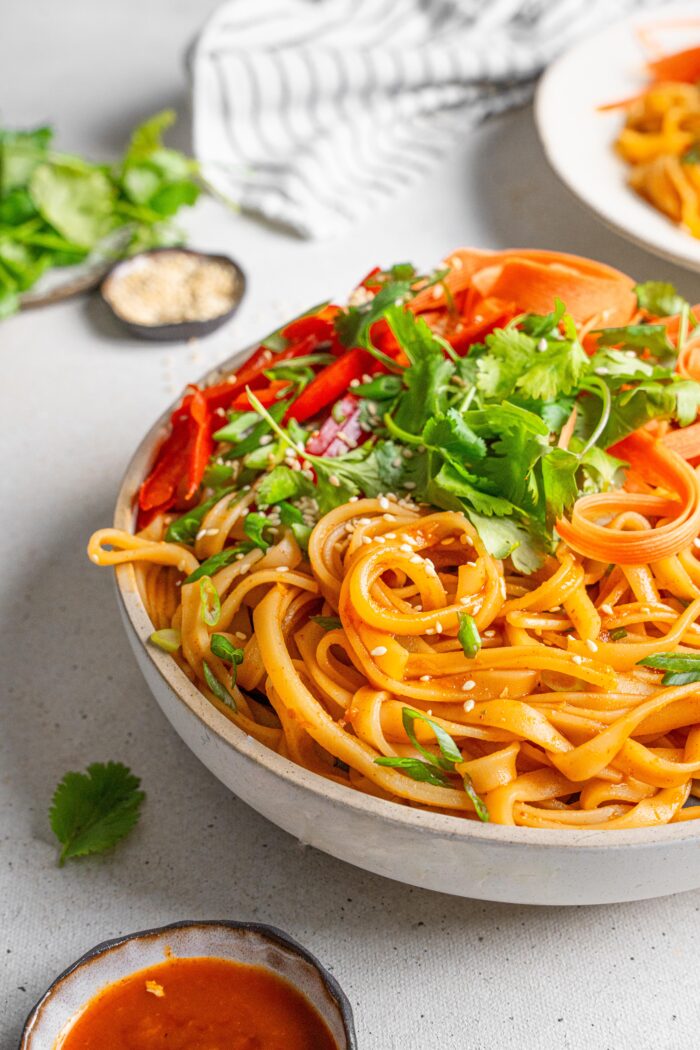
How to Make This Recipe
To make things time-efficient, I would start the prep with all the fresh produce. Dice the green onions, chop the cilantro, slice the bell pepper, peel carrots into ribbons, and finely mince ginger and garlic. The last two will be incorporated into the sauce, while the rest of the vegetables are intended for serving.
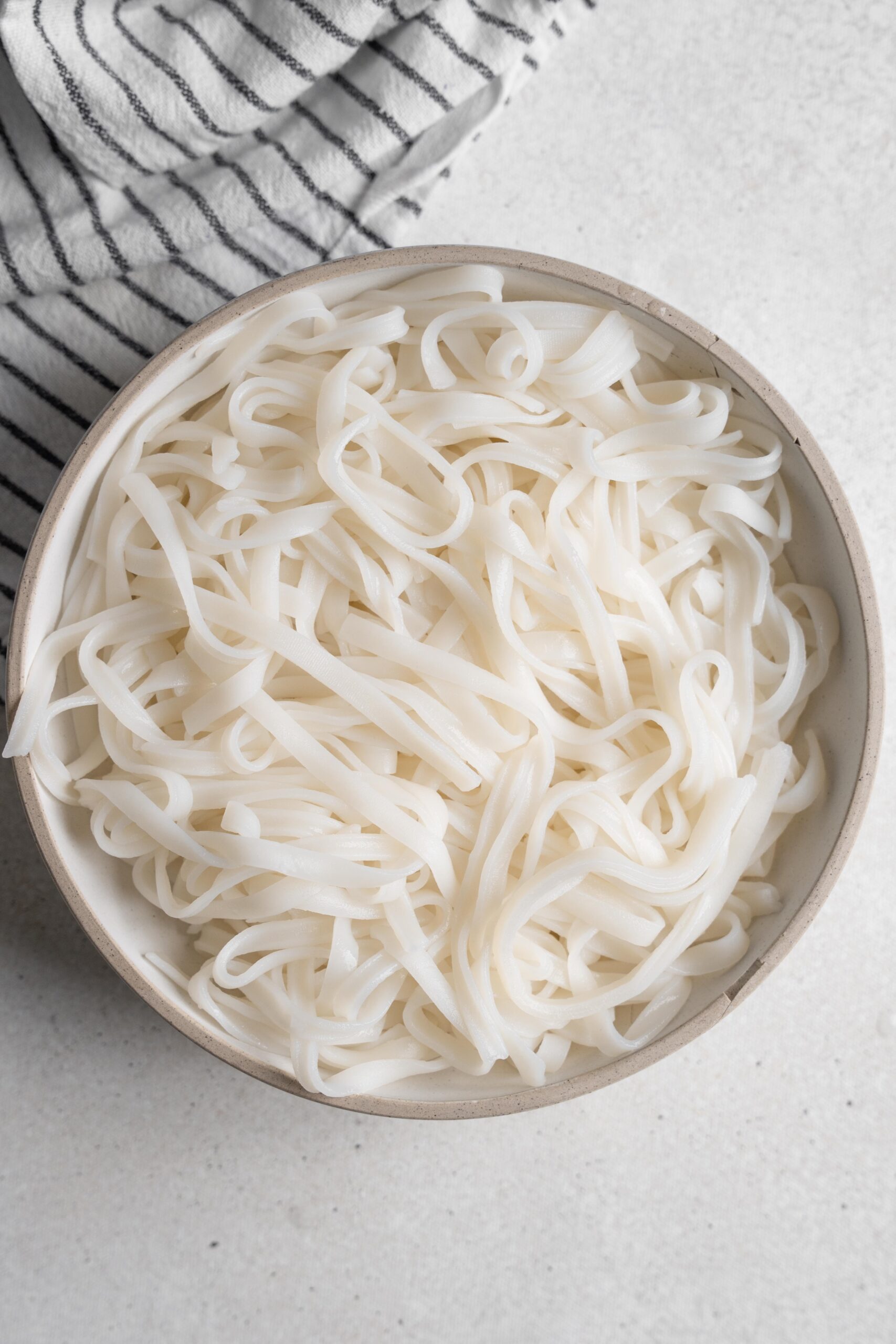
Next, prepare the noodles according to package directions. With some, this may only call for soaking them in hot water, while other manufacturers will tell you to boil the noodles.
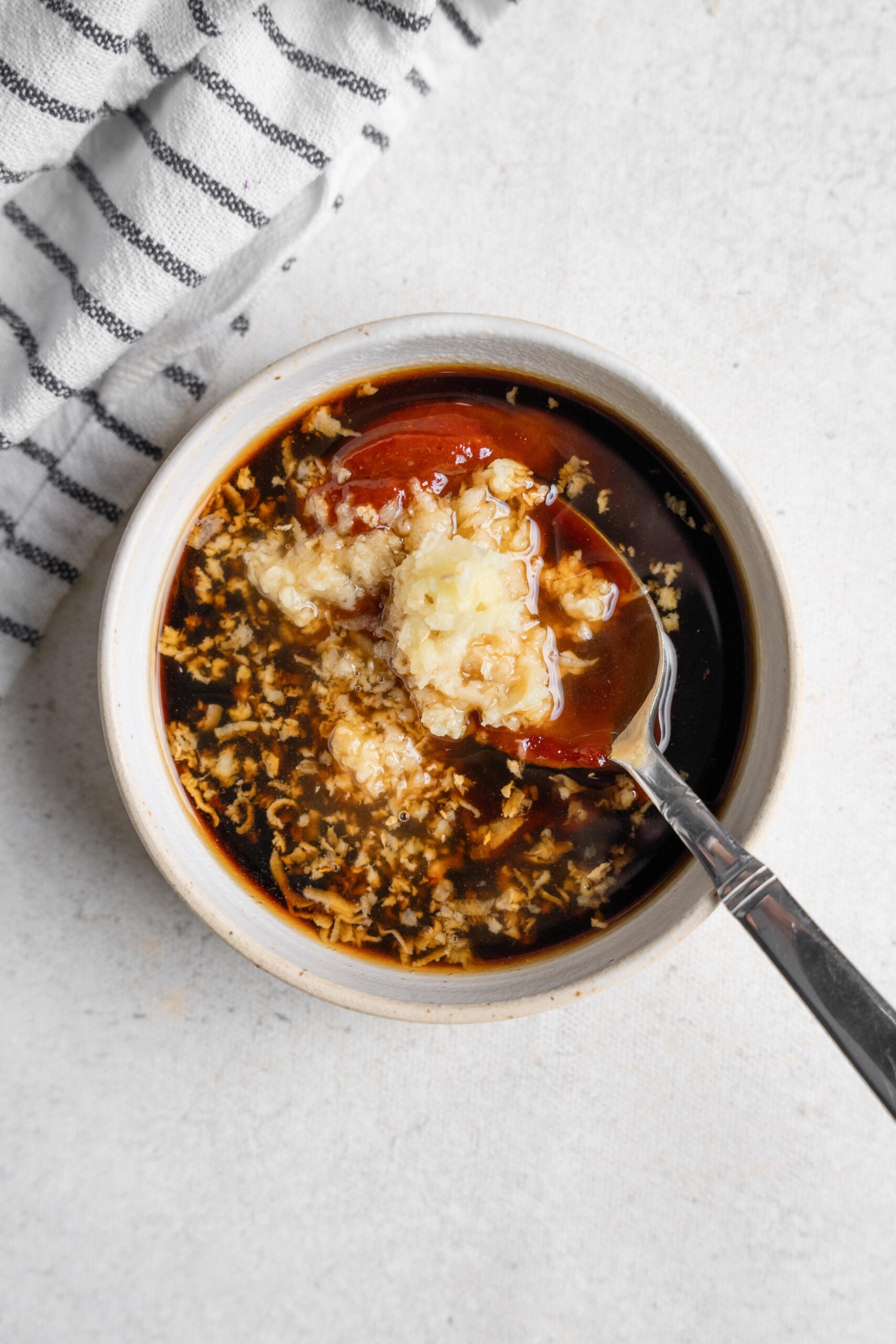
While the noodles cook, prepare the sauce. Whisk all the ingredients in a jar, including gochujang, soy sauce, vinegar, maple syrup, peanut butter, garlic and ginger. You can add 2-3 tablespoons of hot water from cooking the noodles to help everything mix together.
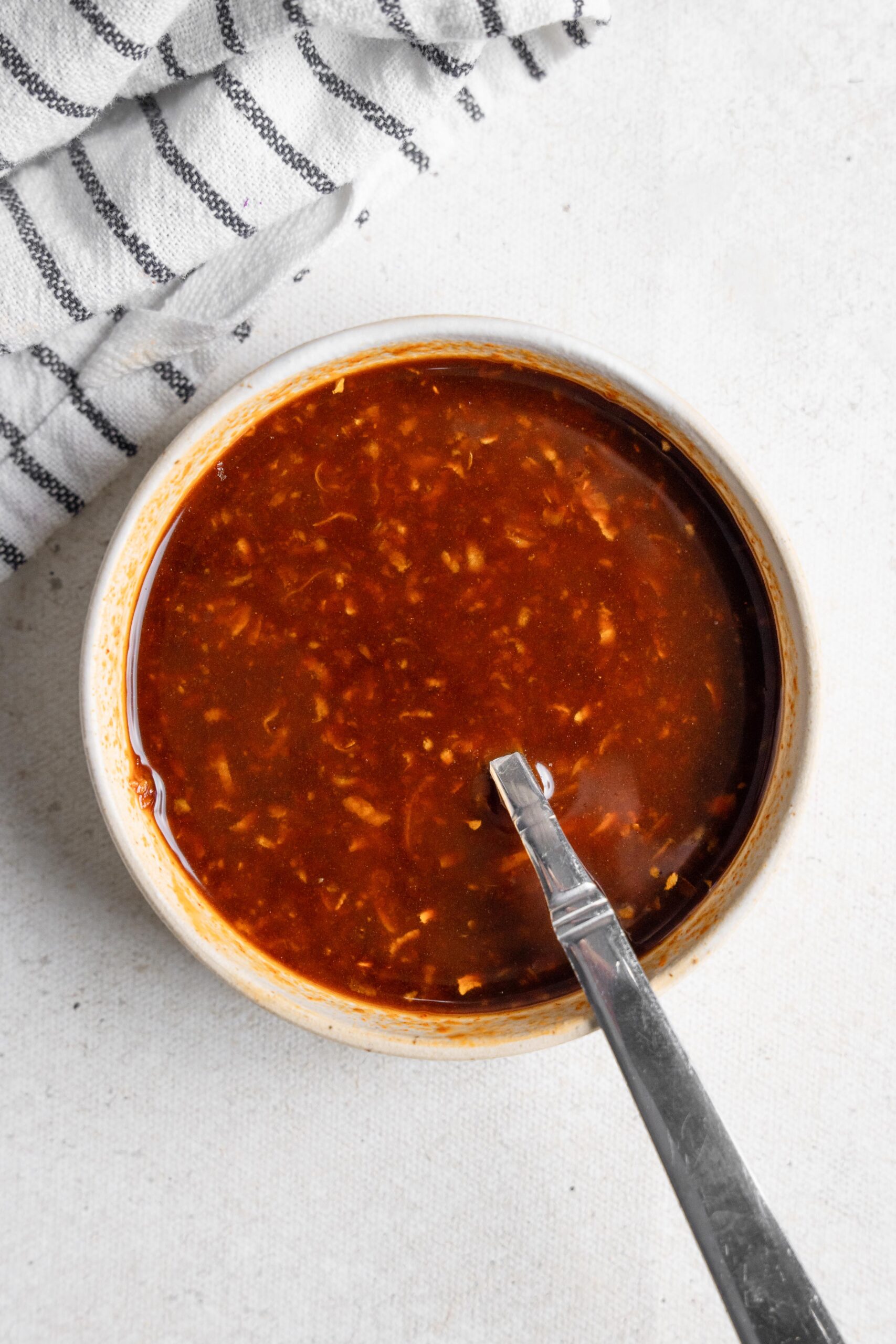
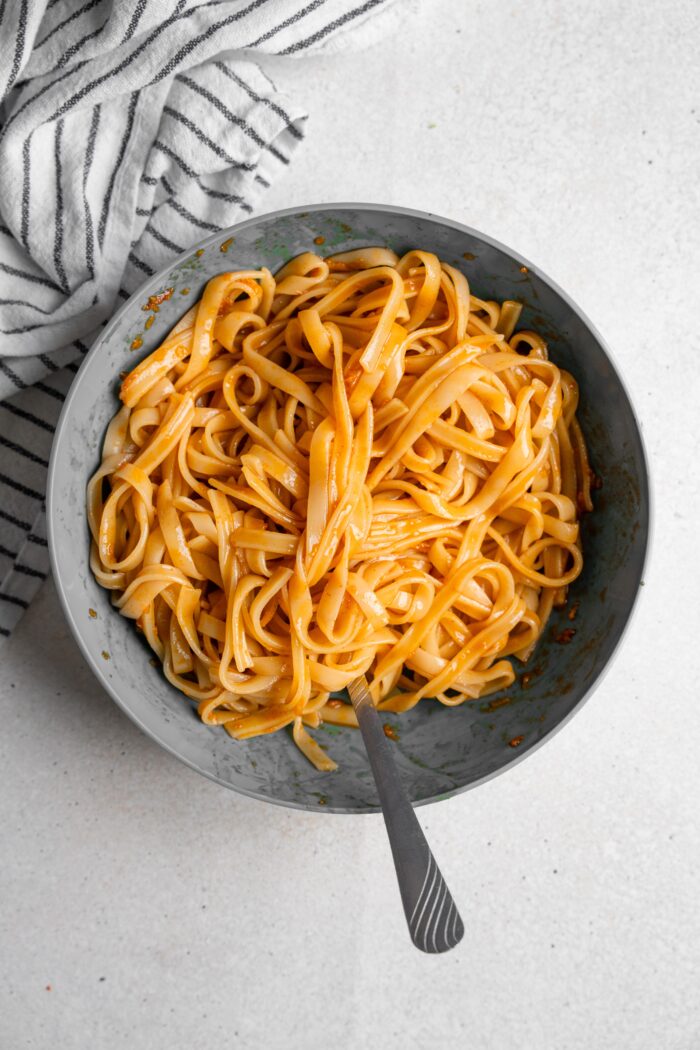
When the noodles are ready, drain the liquid and pour the sauce over the noodles. Toss everything together and garnish with fresh vegetables and sesame seeds.
Hack It!
- The veggies are optional, which means you can skip them altogether if you’re short on time. It also means that you can only add a couple of vegetables from the list, or even use different ingredients for garnishing.
- Rice noodles are great because they cook very quickly and take on the flavor very well. However, you can use almost any other type of noodle depending on your allergies or preference. From glass noodles to thick udon, this sauce goes with anything.
- Gochujang typically contains soy, as does soy sauce. The latter is easy to replace by using coconut aminos. However, it’s a bit more tricky with gochujang. You can make a similar using sweet chili sauce instead of gochujang and maple syrup. It won’t taste the same, but it will be delicious nonetheless.
- Peanuts are another common allergen. You can use a different nut butter, seed butter or even tahini paste.
- If you prefer your noodle sauce to be more liquid, do not drain the water from the noodles. Simply mix in the sauce and adjust the seasonings as needed.

Other Recipes You’ll Love
- Creamy One Pot Green Pasta
- Easy Red Curry Soup
- One Pan Curry Noodles
- Quick Dumpling Soup
- Brothy Rice with Ginger and Garlic
In addition to the excitement of my upcoming cookbook, I have collaborated with an amazing women-led business to bring you an all-in-one supplement. Complement x PlantYou Essential is a fine-tuned multinutrient for plant-based and plant-centered eaters, and it’s available as a subscription!
And if you want a steady stream of delicious, beginner-friendly recipes that can be organized into a custom meal plan, run not walk to sign up for PlantYou Planner app! It has a database of OVER 600 WFPB recipes, an interactive meal planning feature, and a shopping list based on your recipe selection. Still not sure? Try out the FREE version of the app, which gives you access to 25+ vegan recipes and the Vegan Beginner Meal Plan.
The Recipe: Fiery Gochujang Noodles
Ingredients
- 16 oz rice noodles, dry
Gochujang sauce
- 3 tbsp gochujang
- 2 tbsp soy sauce
- 2 tbsp apple cider vinegar
- 1 tbsp maple syrup
- 1 tbsp peanut butter
- 1 clove garlic, finely minced
- ½ thumb ginger, finely minced
- 4 tbsp hot water, to thin, adjust the amount as needed
Optional toppings
- 1 cup green onions, diced
- 1 handful cilantro, or parsley, chopped
- 1 red bell pepper, seeds removed, sliced
- 1 cup carrot, peeled into ribbons
- 1 tbsp sesame seeds
Equipment
- Jar
- Mini whisk
- Vegetable peeler
Instructions
- Prepare the noodles according to package directions.
- While the noodles cook, prepare the vegetables of your choice. Then prepare the sauce. In a jar, whisk together the gochujang, soy sauce, vinegar, maple syrup, peanut butter, garlic, ginger and 2 to 3 tablespoons of hot water, to thin.
- Pour the sauce over the noodles, toss, then finish off with the vegetables.