
Avocado Dye: How to Dye Fabric Pink Using Avocado Scraps
Today we are doing something a little bit different. This Scrappy Cooking recipe uses avocado scraps to create beautiful pink avocado dye!
I am a big advocate for maximizing the use of your produce. You’d be surprised how much food is thrown away as “waste” when it is actually edible!
Over the years, I have discovered so many ways to use food scraps, there was enough for an entire book. If you’re passionate about reducing food waste, you certainly need a copy of PlantYou Scrappy Cooking!
But when it comes to being scrappy, cooking isn’t the only way to utilize food scraps. There are various ways to benefit your household, like with this DIY lemon cleaning spray.
This time, I want to introduce you to the amazing properties of avocado skins and pits, which result in natural, vegan avocado dye. You can use it to add a pink hue to clothes and household items like kitchen towels.

Why You’ll Love This Tutorial
- If you love avocados as much as I do, you probably go through at least a couple of them in a week. Probably more, if you have a larger family. It would be a shame to throw away all of the scraps!
- Although it takes some time and patience, the process of making and using avocado dye is oh-so-simple.
- This is an interesting skill for anyone who loves crafts, and it can be a fun activity for the whole family.
- White fabric tends to yellow over time, no matter how clean you keep your items. With this natural avocado dye, you can give your clothes or tea towels a new life in a different color.
- If you love pink, this is a no-brainer. It is a great excuse to dye as many items as you can various shades of pink!
How Does This Work?
With other natural dyes, it’s a little more obvious. Turmeric, for instance, is a bright rich yellow color. And so, when you use it to dye fabric, that’s exactly the shade it creates.
However, avocados are generally associated with their green flesh and brown or green skins. So, how and why does avocado dye things pink?
Boiling avocado skins and pits creates a pink dye due to the presence of certain polyphenolic compounds and tannins that react to heat and water.
- Tannins. Avocado pits contain high levels of tannins, which are a type of polyphenol. When you boil the pits, the tannins undergo chemical changes that result in a pink or reddish hue.
- Anthocyanins. Although less common in avocado skins and pits compared to other fruits, these pigments can appear red, purple, or blue depending on the pH (acidity).
How to Make Avocado Dye
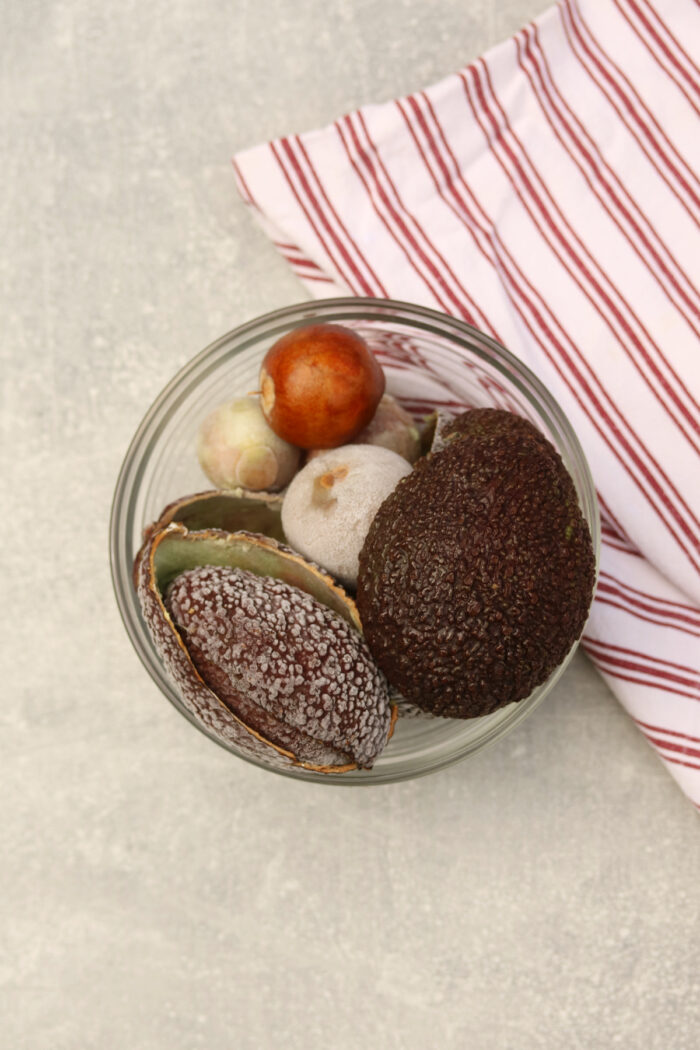
Step 1: Collect skins and pit of 4-6 avocados. You can freeze them until you have enough.

Step 2: Fill a large stock pot with water. Bring to a boil, and add your avocado scraps.
Simmer on low for at least an hour (optimally 1-3 hours), then turn off and leave overnight.

Step 3: Then, remove your avocado scraps using a fine mesh sieve or cheesecloth. Compost your scraps.
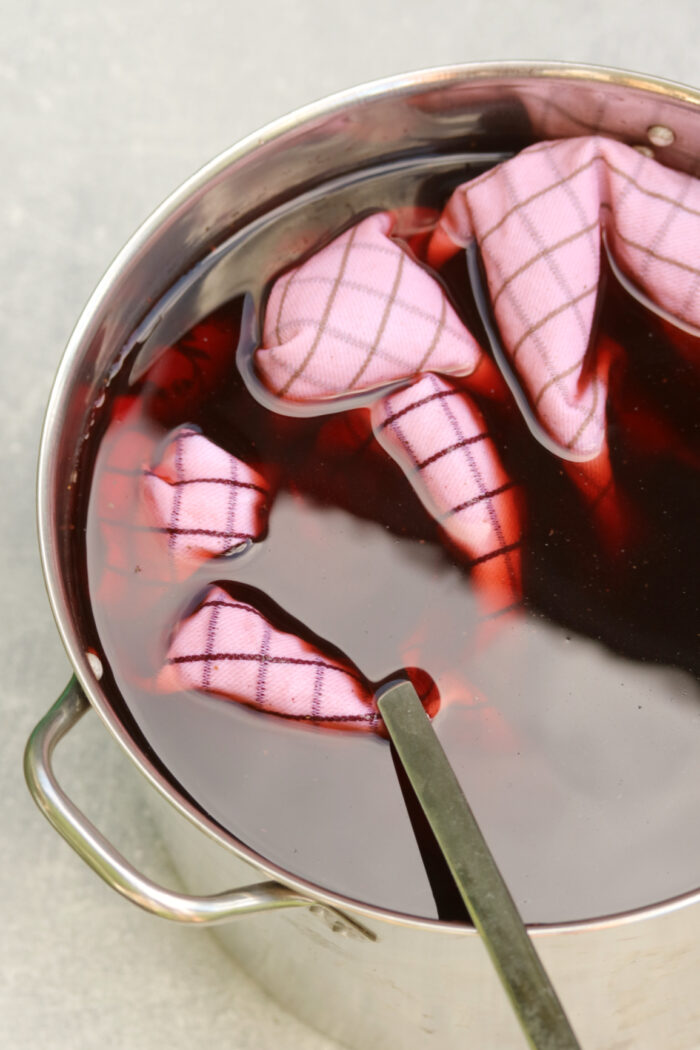
The color of the water should be rich magenta.

Step 4: To use your avocado dye, start by soaking your clothes in cold water for 10-20 minutes.
Make sure the items are completely clean and do one piece at a time unless small.
Step 5: Add the cloth to the dye, and make sure it is fully submerged. I like to keep my clothing submerged for 6-12 hours (even overnight) depending on the desired pigment.
The key is stirring to avoid streaks with a metal or plastic spoon.

Step 6: Remove the clothing from the dye bath and ring out over the pot with your hands to avoid a mess. Rinse lightly if desired.
Please note that the color you see will change to a warmer hue as your clothes dry off.

Step 7: Allow to air dry in a safe spot with a towel underneath.
Try to smooth out any kinks in the fabric to avoid color streaks. If necessary, use sewing pins to keep the fabric in place.

Step 8: Once dry, enjoy, and to clean I would suggest rinsing in cold water and a very small amount of laundry detergent.
Frequently Asked Questions
This method will only work on natural fabrics and blends: cotton, linen, bamboo, hemp, even wool. Choose lighter shades such as white and cream so that the pink shows up.
No recipe or DIY is 100% foolproof. My advice is to dye pieces you aren’t too attached to: something you thrifted or household items like tea towels.
With natural dyes, you have to be prepared for some fading. Avocado dye will fade after a wash, or if you leave your clothes in the sun for a while.
The good news is, you can repeat the process to refresh the color down the line.
I recommend washing manually in cold water with a very small amount of laundry detergent or Castille soap.
If you choose to wash your items in the washing machine, I would suggest pairing it with other avocado-dyed clothes and towels on the first wash.
It’s not always easy to see, but avocado skins generally have two undertones: green or reddish-pink. If you look against the light, you should be able to spot the more pink avocados. They are more suited for this process.
Since this method requires skins and pits from 4-6 avocados, you can collect them over time and store them in the freezer until you have enough.
It’s best to let go of expectations. Although the pigment is generally reddish-pink, the intensity and shade can vary from deep warm pink to light peach.
Things like fabric composition, avocado variety, fresh vs frozen avocado scraps, soaking time will affect the resulting color. Even when you soak a number of items in the same dye liquid, the color can be different.
I use it for 2-3 batches (large items can take up the whole batch) before discarding.
I recommend using scrappy beet powder instead for smoothies, pancakes, cake frosting etc.
Sure can!
More Scrappy Cooking Hacks
- How to Regrow Vegetables From Scraps
- Decaffeinated Date Seed Coffee
- Homemade Pomegranate Powder (Skincare and Tea)
- DIY Lemon Rind Cleaning Spray
- How to Make Orange Peel Powder
Just because you’re eating plenty of fruit and veggies, doesn’t always mean your nutritional criteria is met. I have recently collaborated with an amazing women-led supplement company to create a multinutrient aimed at plant-based and plant-centered eaters. With Complement x PlantYou Essential, thriving on a vegan diet has never been easier!


The Recipe: Avocado Dye
Ingredients
- 4-6 avocado skins and pits, preferably with a pink hue
- water, enough to fit your garment
Equipment
- Large stock pot
Instructions
- Fill a large stock pot with water, enough that a piece of clothing can float in. Bring to a boil, and add your avocado scraps.
- Simmer on low for one to three hours, then turn off and allow to sit overnight. The color should be a rich magenta.
- Now, drain your avocado scraps using a fine mesh sieve or cheese cloth, keeping the dye. Compost your scraps.
- It's time to dye. I like to use white clothing or cloths that are 100% cotton and I typically find these at a thrift store to avoid potential accidents with any treasured pieces. I suggest soaking them in cold water for 10 to 20 minutes before adding to the dye to make the uptake more even. Make sure the clothing or cloth is completely clean.
- Add the cloth to the dye filled pot, and make sure it is submerged. Do one piece at a time unless very small. I like to keep my clothing submerged for 6 to 12 hours (even overnight) depending on the desired pigment. The key is stirring to avoid streaks with a metal or plastic spoon.
- Remove the clothing from the dye bath and ring out over the pot with your hands to avoid a mess. Allow to air dry in a safe spot with a towel underneath. Once dry, enjoy, and to clean I would suggest rinsing in cold water and a very small amount of laundry detergent.
Notes
- Try to select avocados with a red or pink hue on the skin.
- Be sure to stir the dye and your items regularly to avoid streaks of color.
- Choose light-colored household items and clothes for the best results.
- Be patient!